



Learning
centers
in
an
early
childhood
classroom
are
clearly
defined
areas
that
are
intentionally
designed
and
set-up
to
allow
young
children
to
learn through active, hands-on learning.



Writing Center:
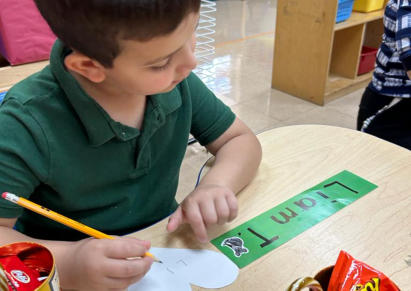
This center is where children can practice the various stages of writing such as making
words with letter tiles, writing in journals, writing in sand, and book making. This center
allows children to explore letters - how letters look, how they compare to each other,
and how they combine to form words.
Literacy Center:
This center allows children to explore letters — how letters look, how they compare
to each other, and how they combine to form words.
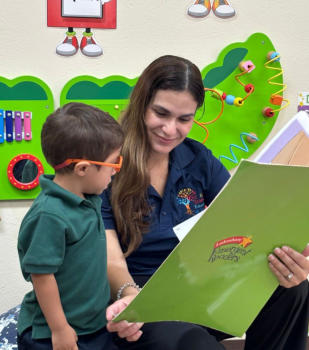
Book Center:
This center is a cozy spot with a variety of books available for the children to look at and read.
In this center children simulate reading books from memory and picture cues. The book center
also includes story props to re-enact and retell stories in the child’s own words.
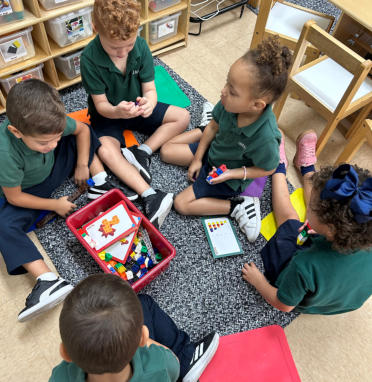
Math/Manipulative Center:
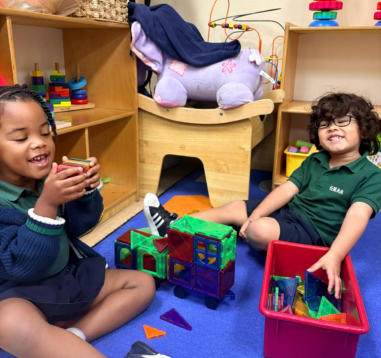
This center is where children learn about basic math concepts such as shapes, colors,
numbers, quantities, measurement, etc. This center is made up of simple games, puzzles,
and manipulatives that can be used in a variety of ways, both simple and complex.
Discovery/Science Center:
This center encourages children to explore, experiment, question, and discover
the world around them. This center will help stimulate a child’s curiosity.
Construction/Block Center:
This center promotes cooperative play as children practice a wide variety of
developmental skills such as building structures, experimenting with balance, patterns,
and symmetry, The construction/block center also help children develop spatial
relations.
Dramatic Play/House Center:
This center encourages imagination and pretend play while promoting both individual
and cooperative play. When children engage in pretend play, they build social skills,
become more aware of their own emotions, and encourages shared language and
problem solving.
Art Center:
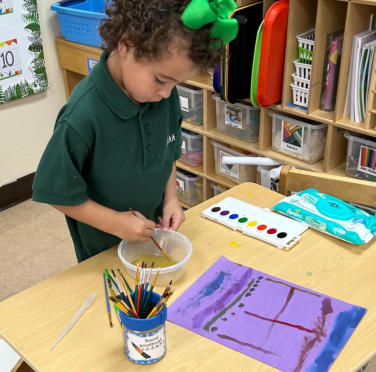
This center allows children to experiment and use a variety of materials as they create their
works of art. Color, shape, and texture recognition are easily facilitated through art. Working
with different materials and texture promotes hand-eye coordination and strengthens fine
motor skills. Most importantly, in the process of being creative, children can express their
own unique individuality as well as their thoughts and feelings.
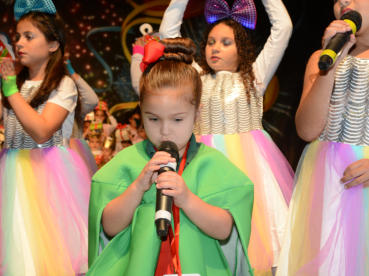
Music and Movement Center:
In this area, children sing, play musical instruments, make up songs, move to the beat,
dance and listen to music.
•
Develops creativity and individuality
•
Promotes language
•
Develops basic math and reading readiness skills
•
Enhances balance and coordination through the development of motor skills
•
Promotes the development of spatial relations
Computer Center:
The use of computers in a preschool setting can be controversial, but because using computers
involves all the ingredients of active learning (materials, choice, language and support from
adults) developmentally appropriate computer activities fit well in an active learning setting.
•
Assists children in recognition of letters, numbers and symbols
•
Develops the child’s ability to estimate distances and amounts
•
Encourages choice and the ability to make good decisions
•
Helps child develop a clearer understanding of cause and effect (What happens if I push
this button?)
•
Enhances hand-eye coordination
•
Strengthens fine motor skills
Outdoor Space:
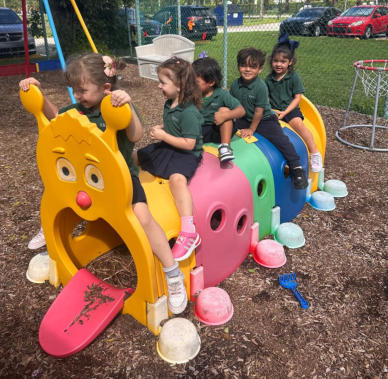
This area is the most essential to the physical growth and development of a young
child. Children are free to run, ride wheeled toys, push/pull wagons, and throw balls.
The outdoor space helps enhance balance and develop large and small motor skills.
Playing outdoors helps children gain confidence in themselves through the use of their
bodies and the environment around them.
Greater Miami Adventist Academy
Early Childhood Education 500 North West 122nd Avenue, Miami, Florida 33182 305.220.5955 | gmaaece.com | gma.edu
© All Rights Reserved. Greater Miami Adventist Academy


Greater Miami Adventist Academy
Early Childhood Education
Learning
centers
in
an
early
childhood
classroom
are
clearly
defined
areas
that
are
intentionally
designed
and
set-up
to
allow
young
children
to
learn through active, hands-on learning.

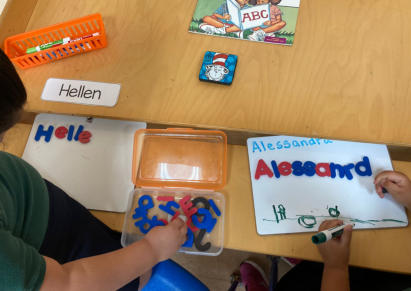
Writing Center:
This center is where children can practice the various
stages of writing such as making words with letter tiles,
writing in journals, writing in sand, and book making.
This center allows children to explore letters - how
letters look, how they compare to each other, and how
they combine to form words.

Book Center:
This center is a cozy spot with a variety of books
available for the children to look at and read. In this
center children simulate reading books from memory
and picture cues. The book center also includes story
props to re-enact and retell stories in the child’s own
words.

Math/Manipulative Center:
This center is where children learn about basic math
concepts such as shapes, colors, numbers, quantities,
measurement, etc. This center is made up of simple
games, puzzles, and manipulatives that can be used in
a variety of ways, both simple and complex.

Discovery/Science Center:
This center encourages children to explore,
experiment, question, and discover the world around
them. This center will help stimulate a child’s curiosity.

Construction/Block Center:
This center promotes cooperative play as children
practice a wide variety of developmental skills such as
building structures, experimenting with balance,
patterns, and symmetry, The construction/block center
also help children develop spatial relations.

Dramatic Play/House Center:
This center encourages imagination and pretend play
while promoting both individual and cooperative play.
When children engage in pretend play, they build social
skills, become more aware of their own emotions, and
encourages shared language and problem solving.

Art Center:
This center allows children to experiment and use a
variety of materials as they create their works of art.
Color, shape, and texture recognition are easily
facilitated through art. Working with different
materials and texture promotes hand-eye coordination
and strengthens fine motor skills. Most importantly, in
the process of being creative, children can express
their own unique individuality as well as their thoughts
and feelings.

Music and Movement Center:
In this area, children sing, play musical instruments,
make up songs, move to the beat, dance and listen to
music.
•
Develops creativity and individuality
•
Promotes language
•
Develops basic math and reading readiness skills
•
Enhances balance and coordination through the
development of motor skills
•
Promotes the development of spatial relations

Computer Center:
The use of computers in a preschool setting can be
controversial, but because using computers involves all
the ingredients of active learning (materials, choice,
language and support from adults) developmentally
appropriate computer activities fit well in an active
learning setting.
•
Assists children in recognition of letters, numbers
and symbols
•
Develops the child’s ability to estimate distances
and amounts
•
Encourages choice and the ability to make good
decisions
•
Helps child develop a clearer understanding of
cause and effect (What happens if I push this
button?)
•
Enhances hand-eye coordination
•
Strengthens fine motor skills

Outdoor Space:
This area is the most essential to the physical growth
and development of a young child. Children are free to
run, ride wheeled toys, push/pull wagons, and throw
balls. The outdoor space helps enhance balance and
develop large and small motor skills. Playing outdoors
helps children gain confidence in themselves through
the use of their bodies and the environment around
them.

Literacy Center:
This center allows children to explore letters — how
letters look, how they compare to each other, and how
they combine to form words.
Give your child a great start with


Greater Miami Adventist Academy
Early Childhood Education 500 North West 122nd Avenue, Miami, Florida 33182 305.220.5955 |gmaaece.com | gma.edu